AI in Education 2026: Tools & Trends for Student Success
Anúncios
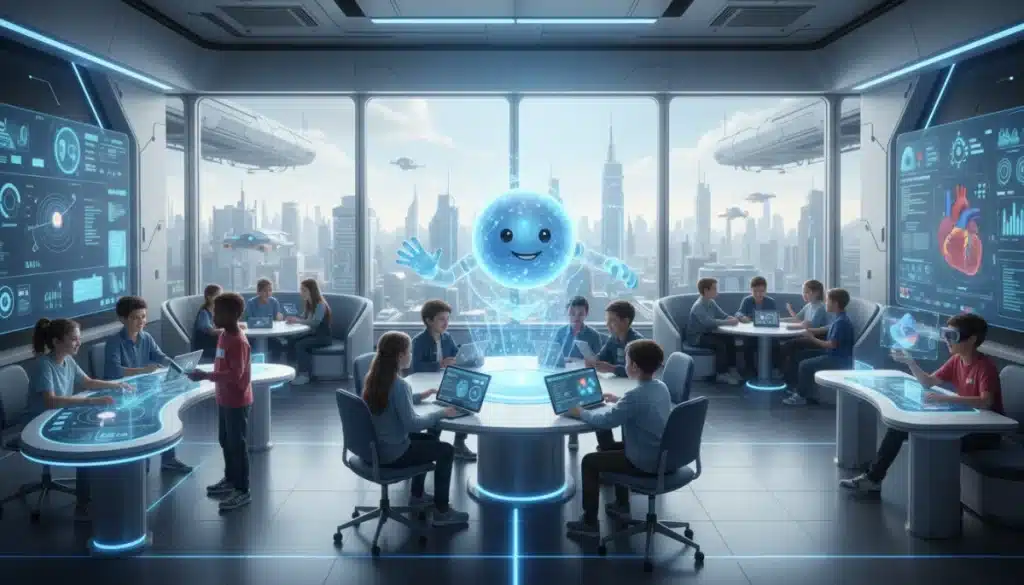
The impact of AI on education in 2026: tools and trends for student success (recent updates) is profoundly reshaping learning with personalized pathways and data-driven insights.
Anúncios
The landscape of learning is undergoing an unprecedented transformation, with artificial intelligence at its core.
The impact of AI on education by 2026: tools and trends for student success (recent updates) is not just a theoretical concept; it’s a tangible reality that is reshaping classrooms, curricula, and career readiness across the United States. This evolution promises a more personalized, efficient, and engaging educational experience for every student.
The rise of personalized learning pathways
Personalized learning, once an ambitious ideal, has become a cornerstone of modern education thanks to AI.
In 2026, AI algorithms are adept at analyzing individual student performance, identifying strengths, weaknesses, and preferred learning styles with remarkable precision. This allows for the creation of truly bespoke educational journeys, moving beyond the one-size-fits-all model of the past.
Adaptive learning platforms: tailored experiences
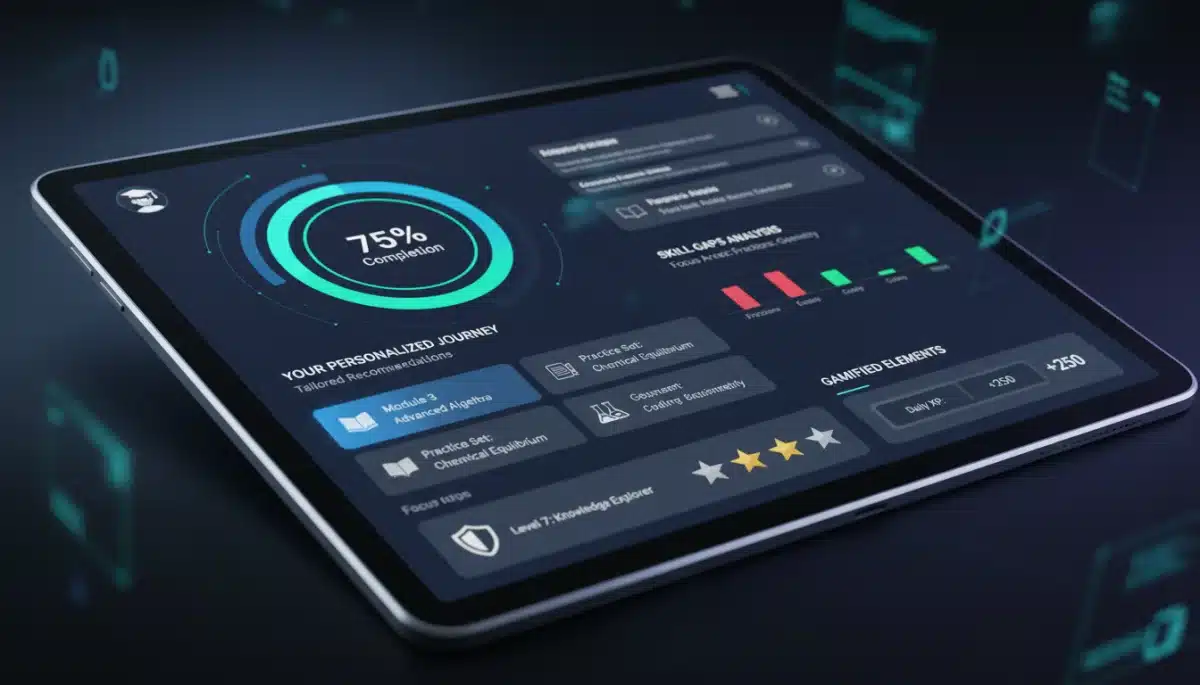
Adaptive learning platforms are at the forefront of this revolution. These systems continuously adjust content difficulty, pace, and presentation based on a student’s real-time interaction and mastery of concepts. They provide immediate feedback, allowing students to correct misconceptions before they become ingrained.
- Dynamic content delivery: AI selects and delivers learning materials that are most effective for each student.
- Real-time assessment: Continuous evaluation helps pinpoint areas requiring more attention.
- Engagement optimization: Platforms adapt to keep students motivated and focused on their learning goals.
The goal is not simply to deliver information, but to foster deeper understanding and critical thinking. By providing content that is always at the optimal challenge level, AI ensures that students are neither bored by overly simple tasks nor overwhelmed by overly complex ones. This balance is crucial for sustained engagement and effective learning outcomes.
Ultimately, personalized learning pathways powered by AI are democratizing access to high-quality education. Students who might otherwise struggle with traditional methods are finding success through tailored approaches, leading to improved academic performance and increased self-confidence.
AI-driven assessment and feedback mechanisms
Assessment and feedback are critical components of the learning process. In 2026, AI is transforming how we evaluate student understanding and provide constructive guidance, moving beyond traditional grading to offer more nuanced and actionable insights.
Automated grading and analytics
AI-powered tools are now capable of grading a wide range of assignments, from multiple-choice questions to complex essays and coding projects. This automation frees up educators’ time, allowing them to focus on teaching and individual student support rather than administrative tasks.
Beyond simple grading, AI systems provide sophisticated analytics. They can identify patterns in student errors, predict future academic challenges, and highlight areas where curriculum adjustments might be beneficial. This data-driven approach empowers educators to make more informed decisions.
- Efficiency in grading: Rapid and consistent evaluation of student work.
- Predictive analytics: Early identification of students at risk of falling behind.
- Curriculum insights: Data to inform and improve teaching methodologies.
The feedback provided by AI is also evolving. Instead of just a score, students receive detailed explanations of their mistakes, suggestions for improvement, and links to relevant resources for further study. This immediate and targeted feedback loop is invaluable for accelerating learning and reinforcing correct understanding.
The integration of AI into assessment practices is not about replacing human educators but enhancing their capabilities. It provides a powerful layer of support, ensuring that every student receives timely, relevant, and personalized feedback essential for their academic growth.
Intelligent tutoring systems and virtual assistants
Imagine having a dedicated tutor available 24/7, tailored specifically to your learning needs. In 2026, intelligent tutoring systems (ITS) and virtual assistants are making this a reality, offering supplementary support that extends beyond the classroom.
Anúncios
These AI-powered tools provide one-on-one instruction, answer questions, and guide students through complex problems. They adapt their teaching methods based on the student’s responses, much like a human tutor would, but with the added benefit of vast data processing capabilities.
Enhancing accessibility and support
Virtual assistants, integrated into learning platforms, can help students navigate course materials, schedule study sessions, and even provide emotional support by recommending mindfulness exercises or connecting them with human counselors if needed. This holistic approach recognizes that student success is influenced by more than just academic performance.
- 24/7 availability: Students can access help whenever they need it.
- Customized guidance: AI tutors adapt to individual learning paces and styles.
- Resource navigation: Virtual assistants streamline access to educational tools and support services.
The development of ITS is particularly beneficial for students in underserved areas or those with specific learning disabilities, providing resources that might otherwise be inaccessible. By democratizing access to high-quality tutoring, AI helps level the playing field, ensuring more equitable educational opportunities.
These systems are not designed to replace teachers but to augment their capabilities, allowing educators to focus on higher-level instruction, mentorship, and addressing complex student needs. The synergy between human teachers and AI tutors creates a robust support network for learners.
AI in curriculum development and content creation
The traditional process of curriculum development is often time-consuming and resource-intensive. In 2026, AI is streamlining this process, enabling educators to create more relevant, engaging, and up-to-date content with greater efficiency.
AI tools can analyze vast amounts of educational data, including research papers, textbooks, and student performance metrics, to identify gaps in existing curricula and suggest improvements. They can also help educators generate new content, such as interactive exercises, simulations, and virtual labs.
Dynamic and responsive curricula
With AI, curricula can become more dynamic and responsive to real-world changes. As industries evolve and new knowledge emerges, AI can quickly identify these shifts and recommend updates to ensure that students are learning the most current and relevant skills.
- Data-driven insights: AI identifies content gaps and areas for improvement.
- Automated content generation: Helps create diverse and interactive learning materials.
- Relevance and currency: Ensures curricula remain up-to-date with global developments.
Furthermore, AI can assist in tailoring content for different learning levels and cultural contexts, making education more inclusive and accessible. This capability is vital for addressing the diverse needs of student populations in the United States and beyond.
The role of the educator shifts from being the sole content creator to a curator and facilitator, leveraging AI to enhance their instructional materials and focus on delivering impactful learning experiences. This collaborative approach between human expertise and AI efficiency is defining the future of curriculum design.
Ethical considerations and challenges in AI education
While the promise of AI in education is immense, it also brings a host of ethical considerations and challenges that must be addressed carefully. Ensuring fairness, privacy, and accountability is paramount as these technologies become more integrated into learning environments.
One major concern is data privacy. AI systems collect vast amounts of student data, from performance metrics to behavioral patterns. Protecting this sensitive information from misuse and ensuring compliance with privacy regulations like FERPA in the U.S. is a critical challenge.
Bias in algorithms and equitable access
Another significant issue is algorithmic bias. If AI models are trained on biased data, they can perpetuate and even amplify existing inequalities, potentially leading to unfair outcomes for certain student demographics. Developers and educators must work together to ensure AI systems are fair and equitable.
- Data privacy: Protecting sensitive student information is crucial.
- Algorithmic bias: Ensuring AI models are fair and do not perpetuate inequalities.
- Digital divide: Addressing disparities in access to AI tools and internet connectivity.
The digital divide also presents a challenge. Not all students have equal access to the necessary technology or reliable internet connectivity, which could exacerbate existing educational inequalities if not proactively addressed. Policies must be put in place to ensure equitable access for all.
Educators also need comprehensive training to effectively integrate AI tools into their teaching practices and understand their ethical implications. This includes learning how to interpret AI-generated insights and critically evaluate the recommendations provided by these systems.
Navigating these challenges requires ongoing dialogue, robust regulatory frameworks, and a commitment to developing AI technologies that serve the best interests of all learners.
Preparing students for an AI-driven future workforce
The rapid advancement of AI is not only changing how students learn but also what they need to learn to succeed in the future workforce. Education in 2026 must focus on equipping students with skills that complement, rather than compete with, artificial intelligence.
Critical thinking, creativity, problem-solving, and emotional intelligence are becoming increasingly vital. These are skills that AI currently struggles to replicate and will be highly valued in jobs that require human ingenuity and interpersonal interaction.
New literacies and computational thinking
Students also need to develop new literacies, including data literacy, AI literacy, and computational thinking. Understanding how AI works, its capabilities, and its limitations will be essential for navigating an increasingly automated world.
- Human-centric skills: Emphasizing creativity, critical thinking, and emotional intelligence.
- AI literacy: Understanding AI principles, ethics, and applications.
- Adaptability and lifelong learning: Fostering a mindset of continuous learning and skill development.
Vocational and higher education institutions are adapting their programs to include more interdisciplinary studies, project-based learning, and apprenticeships that integrate AI tools. This ensures students gain practical experience in applying AI in real-world contexts.
The goal is to cultivate a generation of innovators who can leverage AI to solve complex problems, create new opportunities, and contribute positively to society. This preparation extends beyond technical skills to include ethical reasoning and a strong sense of social responsibility.
By focusing on these essential skills and literacies, education systems can ensure that students are not just consumers of AI but active participants in shaping the future of work and society.
| Key Aspect | Brief Description |
|---|---|
| Personalized Learning | AI tailors educational content and pace to individual student needs and learning styles. |
| Smart Assessment | AI automates grading and provides analytical feedback, identifying learning patterns. |
| Curriculum Evolution | AI assists in developing dynamic, relevant curricula and content creation. |
| Ethical Challenges | Addressing data privacy, algorithmic bias, and equitable access in AI integration. |
Frequently asked questions about AI in education
AI personalizes learning by analyzing individual student data, including performance, pace, and learning styles. It then tailors content, assignments, and feedback to create a unique educational path for each student, optimizing engagement and comprehension. This ensures a more effective and efficient learning experience.
AI-driven assessment offers benefits like automated grading, real-time feedback, and predictive analytics. It frees up educators’ time, identifies learning gaps early, and provides data to improve curriculum design. This leads to more efficient evaluation and targeted support for students.
No, AI is not intended to replace human teachers. Instead, it serves as a powerful tool to augment educators’ capabilities, handling repetitive tasks and providing data-driven insights. Teachers can then focus on mentorship, complex problem-solving, and fostering critical human skills that AI cannot replicate.
Key ethical concerns include student data privacy, potential algorithmic bias that could perpetuate inequalities, and ensuring equitable access to AI technologies. Addressing these requires robust regulations, careful development, and ongoing training for educators to use AI responsibly.
AI prepares students by emphasizing critical thinking, creativity, and AI literacy. It also helps in developing adaptability and computational thinking. Education focuses on skills that complement AI, ensuring students can leverage technology to solve complex problems and thrive in an evolving job market.
Conclusion
The integration of AI into education by 2026 is fundamentally reshaping how we approach learning, teaching, and student success. From personalized learning pathways and intelligent tutoring systems to advanced assessment tools, AI offers unprecedented opportunities to create more engaging, efficient, and equitable educational experiences. While challenges related to ethics and access remain, the proactive development and thoughtful implementation of these technologies promise a future where education is more adaptable, inclusive, and empowering for every student, preparing them effectively for an an AI-driven world.
