2026 WIC Benefits: Your Guide to Monthly Food Assistance

Anúncios
Navigating 2026 WIC benefits is crucial for families seeking monthly food assistance for young children, offering vital nutritional support and health resources.
Anúncios
Understanding and accessing the right support for your family’s health and nutrition is paramount. This guide to Navigating 2026 WIC Benefits: A Guide to Receiving Monthly Food Assistance for Families with Young Children will provide a comprehensive overview of how the program works, what changes to expect, and how to ensure your family receives the assistance it deserves.
Understanding WIC in 2026: What’s New?
The Special Supplemental Nutrition Program for Women, Infants, and Children (WIC) continues to be a cornerstone of public health support for low-income pregnant, breastfeeding, and postpartum women, and to infants and children up to age five who are found to be at nutritional risk. As we move into 2026, WIC is evolving, incorporating new guidelines and technological advancements to better serve its beneficiaries across the United States. These updates aim to streamline the application process, enhance benefit delivery, and expand access to nutritious foods, ensuring families can more easily obtain the support they need.
One of the most significant shifts in 2026 WIC benefits is the continued emphasis on digital platforms. States are increasingly moving towards fully electronic benefit transfer (EBT) systems, making it simpler for participants to use their benefits at authorized grocery stores. This transition reduces stigma and offers greater flexibility in shopping. Furthermore, there’s a push for enhanced online resources, including virtual appointments and digital applications, reflecting a commitment to modernizing the program for today’s families.
Key program enhancements for 2026
- Expanded food list: The WIC food package has been reviewed and updated to align with the latest dietary guidelines, potentially including a wider variety of fruits, vegetables, and whole grains.
- Digital accessibility: More states are offering comprehensive online portals for application, appointment scheduling, and benefit management, improving convenience for participants.
- Community partnerships: Increased collaboration with local food banks and community organizations aims to provide holistic support beyond just WIC benefits, addressing broader food security needs.
These enhancements are designed to make WIC more responsive to the needs of modern families, ensuring that the program remains an effective tool in preventing nutritional deficiencies and promoting healthy development in young children. The focus remains on providing targeted nutritional support, education, and referrals to healthcare and social services.
Eligibility Requirements for 2026 WIC Benefits
Determining eligibility for WIC benefits involves several criteria, including income, nutritional risk, and categorical eligibility. In 2026, these foundational requirements remain largely consistent, but it’s important to understand the nuances and any minor adjustments that might affect your family’s application. WIC is designed to serve those most in need, ensuring that precious resources are allocated effectively to promote the health and well-being of vulnerable populations.
Income eligibility is typically set at or below 185% of the federal poverty line. However, participation in other assistance programs, such as SNAP, Medicaid, or TANF, can automatically qualify individuals for WIC without a separate income assessment. This cross-program eligibility simplifies the application process for many families already receiving other forms of government aid. It’s always advisable to check the specific income guidelines for your state, as they can be adjusted annually.
Nutritional risk assessment
A crucial component of WIC eligibility is the nutritional risk assessment, conducted by a health professional (e.g., a nutritionist, nurse, or dietitian) at a WIC clinic. This assessment identifies individuals who have medical-based or diet-based conditions that put them at risk. Examples include anemia, underweight, overweight, or inadequate dietary intake for specific nutrients. This personalized approach ensures that WIC benefits are tailored to address individual health needs.
- Medical risk conditions: Diagnosed health issues like pregnancy complications, diabetes, or certain developmental delays in children.
- Dietary risk conditions: Inadequate intake of essential vitamins or minerals, or poor eating habits identified through dietary assessment.
- Anthropometric risk conditions: Abnormal weight for height, height for age, or weight for age measurements for infants and children.
The categorical eligibility for WIC includes pregnant women, breastfeeding women (up to one year postpartum), non-breastfeeding postpartum women (up to six months postpartum), infants (up to their first birthday), and children (up to their fifth birthday). Understanding these categories and meeting the income and nutritional risk criteria are the key steps to accessing 2026 WIC benefits. Local WIC agencies are the best resource for detailed, up-to-date information on eligibility in your specific area.
The Application Process: Step-by-Step for 2026
Applying for WIC benefits might seem daunting, but in 2026, the process is designed to be more accessible and straightforward than ever before. Knowing the steps involved can help you prepare and ensure a smooth application experience, allowing your family to start receiving monthly food assistance without unnecessary delays. The goal is to connect eligible families with vital resources efficiently.
The first step is to locate your nearest WIC clinic or agency. This can usually be done through your state’s WIC program website or by calling a statewide WIC hotline. Many states now offer online pre-application forms, which can save time during your in-person or virtual appointment. It’s essential to gather all necessary documents before your appointment to avoid multiple visits.
Required documents for your WIC application
- Proof of identity: Valid ID for all applicants (e.g., driver’s license, birth certificate, passport for adults; birth certificate, immunization record for children).
- Proof of residency: Utility bill, rental agreement, or mail with your current address.
- Proof of income: Pay stubs, tax returns, employer’s statement, or documentation of participation in other assistance programs like SNAP or Medicaid.
Once you have all your documents, you’ll attend an appointment with a WIC staff member. During this appointment, your eligibility will be determined based on the categorical, residential, income, and nutritional risk criteria. A health professional will conduct the nutritional risk assessment. If approved, you will receive your WIC EBT card and instructions on how to use your benefits. It’s crucial to ask any questions you have during this meeting to fully understand the program’s guidelines and your responsibilities as a participant.
Anúncios
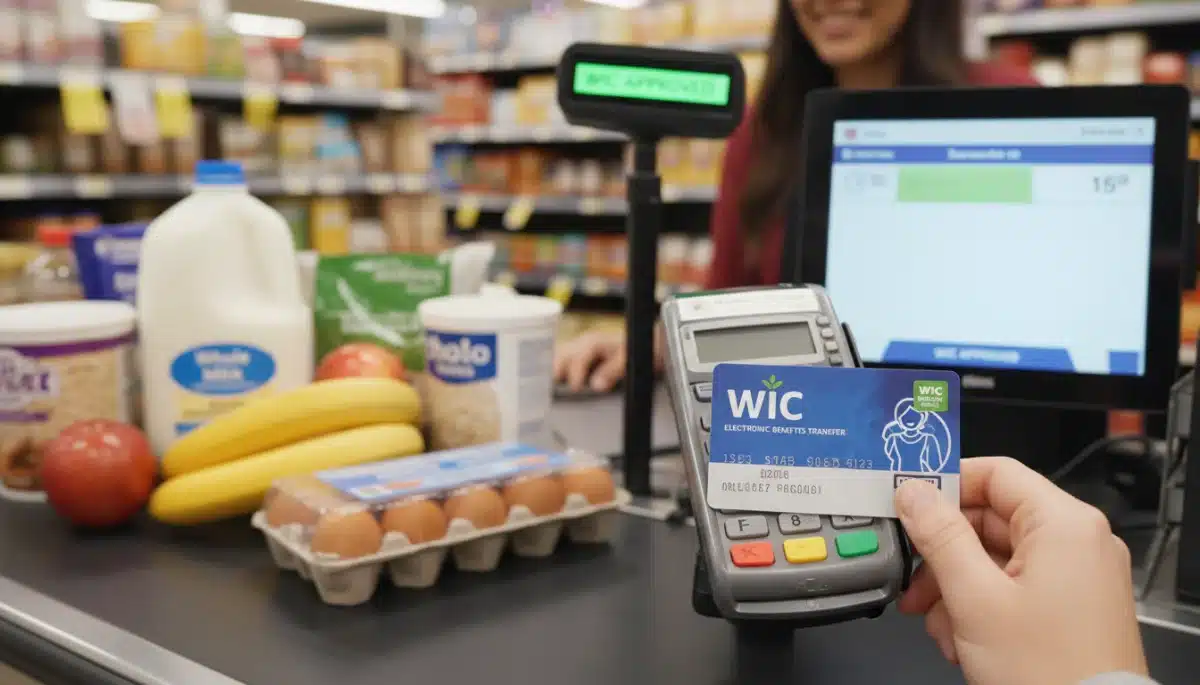
The application process in 2026 is streamlined to ensure that families can quickly access the support they need. Being prepared with the correct documentation and understanding each step will significantly ease your journey to receiving 2026 WIC benefits.
What Foods are Covered by 2026 WIC Benefits?
The WIC food package is specifically designed to address the nutritional needs of pregnant women, new mothers, infants, and young children, providing nutrient-rich foods that support healthy growth and development. In 2026, the list of WIC-approved foods continues to reflect current dietary science and recommendations, aiming to maximize nutritional impact for beneficiaries. Understanding what foods are covered is key to effectively utilizing your benefits.
WIC benefits are not a general grocery allowance; instead, they provide specific food items that are rich in nutrients often lacking in the diets of the target population. These typically include milk, eggs, cheese, cereal, fruit juice, dried beans or peas, and peanut butter. For infants, WIC provides iron-fortified infant formula, and for breastfeeding mothers and older children, fresh fruits and vegetables are a significant component.
Recent additions and emphasis on healthy choices
In recent years, WIC has expanded its food list to include more fresh and frozen fruits and vegetables, recognizing their importance in a balanced diet. The 2026 guidelines continue this trend, offering greater flexibility and choice within the healthy food categories. This empowers families to select foods that align with their cultural preferences and dietary needs, while still meeting WIC’s nutritional goals.
- Whole grains: A variety of whole-grain options, such as bread, tortillas, and brown rice, are typically included.
- Dairy alternatives: Some states may offer approved dairy alternatives for individuals with lactose intolerance or allergies.
- Fish and legumes: Certain types of canned fish and a wider range of legumes might be available, offering essential proteins and healthy fats.
It’s important to note that the specific food items and quantities can vary slightly by state and by the participant’s category (e.g., pregnant woman, infant, child). WIC clinics provide a detailed list of approved foods and often offer nutrition education to help families make the best choices. Always refer to your state’s WIC program guidelines and your WIC EBT card’s balance to ensure you are purchasing eligible items.
Maximizing Your 2026 WIC Benefits: Tips and Strategies
Receiving WIC benefits is a fantastic step towards ensuring your family’s nutritional well-being, but knowing how to maximize those benefits can make an even greater impact. In 2026, with evolving guidelines and digital tools, there are several strategies families can employ to get the most out of their monthly food assistance. These tips go beyond simply using the EBT card, focusing on comprehensive utilization and understanding the program’s full potential.
One of the most effective ways to maximize your 2026 WIC benefits is to attend all scheduled WIC appointments. These appointments are not just for eligibility checks; they offer invaluable nutrition education, breastfeeding support, and referrals to other health and social services. WIC nutritionists can provide personalized advice on healthy eating, meal planning, and addressing specific dietary concerns for you and your children.
Utilizing WIC resources beyond food assistance
WIC is more than just a food program; it’s a comprehensive support system for families with young children. Taking advantage of all the resources available can significantly enhance your family’s health and development.
- Nutrition education: Learn about healthy cooking, portion sizes, and how to introduce new foods to your children.
- Breastfeeding support: WIC offers peer counselors, lactation consultants, and breast pump loans to support breastfeeding mothers.
- Health referrals: Get connected to pediatricians, dentists, immunizations, and other crucial healthcare services.
- Community connections: Discover local resources for childcare, housing assistance, and educational programs.
Another key strategy is to plan your grocery shopping. Familiarize yourself with the WIC-approved food list for your state and make a shopping list before heading to the store. This helps ensure you purchase all eligible items and avoid confusion at checkout. Many stores also clearly label WIC-approved items, making shopping easier. By actively engaging with all aspects of the program, families can truly maximize the positive impact of their 2026 WIC benefits on their health and financial stability.
Addressing Common Challenges with WIC in 2026
While WIC is designed to be a supportive program, families may encounter various challenges when trying to access or utilize their benefits. Understanding these common hurdles and knowing how to navigate them in 2026 can help ensure a smoother experience and prevent unnecessary interruptions to your food assistance. Being prepared for potential issues is an important part of successfully managing your WIC participation.
One frequent challenge is understanding the specific WIC-approved food list, which can vary by state and sometimes by store. It’s not uncommon for participants to select items they believe are covered, only to find they are not WIC-eligible at checkout. This can be frustrating and embarrassing. To mitigate this, always refer to the most current WIC food list provided by your local agency and look for WIC labels in stores. Many WIC programs also offer mobile apps that can scan barcodes to confirm eligibility.
Overcoming typical obstacles
- Expired benefits: WIC benefits are loaded monthly and typically expire after a certain period. Make sure to use your benefits within the designated timeframe to avoid losing them.
- Clinic appointment logistics: Scheduling and attending appointments can be difficult for busy parents. Many WIC agencies now offer flexible scheduling, virtual appointments, and reminders to help.
- Language barriers: If English is not your primary language, inquire about language assistance services or interpreters at your WIC clinic to ensure clear communication.
- EBT card issues: Lost, stolen, or malfunctioning EBT cards can disrupt benefit access. Contact your WIC agency immediately if you encounter any card-related problems.
Another challenge can be transportation to WIC clinics or authorized stores. While WIC does not directly provide transportation, staff can often refer you to local community resources that offer assistance. Don’t hesitate to communicate any difficulties you’re facing with your WIC agency. They are there to help and can often provide solutions or direct you to appropriate support services, making your journey with 2026 WIC benefits as seamless as possible.
The Long-Term Impact of WIC on Families and Children
The benefits of WIC extend far beyond providing monthly food assistance; the program has a profound and lasting impact on the health, development, and overall well-being of families and young children. Investing in early nutrition and health support through WIC creates a ripple effect, contributing to stronger communities and brighter futures. Examining this long-term impact highlights the critical role WIC plays in public health in 2026 and beyond.
One of the most significant long-term impacts is improved health outcomes for both mothers and children. Studies have consistently shown that WIC participation is associated with fewer premature births, lower infant mortality rates, and improved birth weights. For children, WIC contributes to better cognitive development, reduced rates of anemia, and improved immunization rates. These early health advantages lay a strong foundation for a child’s entire life.
Societal and economic benefits
Beyond individual health, WIC also delivers substantial societal and economic benefits. By improving the health of mothers and children, WIC reduces healthcare costs associated with low birth weight and other preventable conditions. Healthier children are also more likely to perform better in school, leading to greater educational attainment and, eventually, a more productive workforce.
- Reduced healthcare costs: Preventative care and improved health through WIC lead to fewer medical emergencies and long-term health issues.
- Educational attainment: Nutritionally sound children are better prepared for learning, contributing to higher academic achievement.
- Economic productivity: A healthier, better-educated populace contributes more significantly to the economy over time.
- Food security: WIC helps alleviate food insecurity, reducing stress on families and improving overall quality of life.
WIC also empowers parents with knowledge and resources, fostering healthier eating habits that can last a lifetime. The nutrition education and breastfeeding support provided by WIC equip families with the tools to make informed choices about food and health, creating a legacy of wellness. The comprehensive nature of 2026 WIC benefits underscores its role as a vital public health program, shaping healthier generations and strengthening the fabric of society.
| Key Point | Brief Description |
|---|---|
| 2026 WIC Updates | Continued shift to digital EBT, expanded food lists, and enhanced online resources for families. |
| Eligibility Criteria | Income at or below 185% FPL, nutritional risk assessment, and categorical eligibility (pregnant, postpartum, infants, children up to 5). |
| Covered Foods | Nutrient-rich items like milk, eggs, cereals, fruits, vegetables, and infant formula, with state-specific variations. |
| Maximizing Benefits | Attend appointments, utilize nutrition education, breastfeeding support, and plan grocery shopping effectively. |
Frequently Asked Questions About 2026 WIC Benefits
In 2026, WIC benefits are seeing an increased push towards digital EBT systems across all states, an expansion of the approved food list to include more fresh produce and whole grains, and enhanced online resources for application and appointment management, aiming for greater accessibility and convenience for families.
To apply, first locate your nearest WIC clinic or agency. You’ll need to provide proof of identity, residency, and income for all family members. An appointment will be scheduled for a nutritional risk assessment. Many states offer online pre-applications to streamline this initial process.
WIC benefits cover specific nutrient-rich foods such as milk, eggs, cheese, iron-fortified cereals, peanut butter, dried beans/peas, and a variety of fruits and vegetables. Infant formula is also provided. The exact list can vary by state and individual nutritional needs, so check your local WIC guidelines.
Yes, participation in other assistance programs like SNAP (Supplemental Nutrition Assistance Program), Medicaid, or TANF (Temporary Assistance for Needy Families) can automatically qualify you for WIC income eligibility. This simplifies the application process, as you won’t need a separate income assessment for WIC.
Beyond food, WIC provides essential nutrition education, personalized breastfeeding support from peer counselors and lactation consultants, and referrals to vital healthcare and social services. These additional resources are designed to offer holistic support for the health and development of mothers, infants, and young children, fostering long-term well-being.
Conclusion
Navigating 2026 WIC Benefits: A Guide to Receiving Monthly Food Assistance for Families with Young Children serves as a vital resource for ensuring the health and nutritional well-being of the most vulnerable populations. As WIC continues to evolve with technological advancements and updated dietary guidelines, its core mission remains steadfast: to provide crucial support that fosters healthy development from pregnancy through early childhood. By understanding the eligibility criteria, streamlined application process, and the comprehensive range of covered foods and services, families can effectively leverage WIC benefits. The long-term impact of this program on reducing health disparities and promoting educational success underscores its irreplaceable value in building stronger, healthier communities across the United States. Engaging with WIC means investing in a brighter future for our children.
