2026 Energy Sector Investments: Growth Stocks with 20% Upside
Anúncios
The 2026 energy sector offers significant investment potential, with specific growth stocks identified as having a 20% upside, driven by innovation and market shifts.
Anúncios
As we approach 2026, the landscape of 2026 energy sector investments is rapidly evolving, presenting unique opportunities for discerning investors. This period marks a pivotal shift, driven by technological advancements, geopolitical influences, and an increasing global commitment to sustainable practices.
Understanding the 2026 Energy Landscape
The energy sector in 2026 is characterized by dynamic shifts, moving away from traditional fossil fuels towards a more diversified and sustainable energy mix. This transformation is not merely an environmental imperative but a significant economic driver, creating new markets and investment avenues. Investors are keenly observing how policy changes, technological breakthroughs, and consumer demand will reshape profitability.
Key drivers of change
Several factors are propelling the energy sector’s evolution. Government incentives for renewable energy, coupled with escalating concerns about climate change, are accelerating the transition. Furthermore, advancements in energy storage, smart grids, and artificial intelligence are revolutionizing how energy is produced, distributed, and consumed.
- Policy and regulatory support: Governments worldwide are enacting policies that favor clean energy, including tax credits, subsidies, and carbon pricing mechanisms, making renewable projects more financially attractive.
- Technological innovation: Breakthroughs in battery technology, hydrogen production, and carbon capture are opening new frontiers for energy generation and efficiency.
- Consumer demand: A growing awareness among consumers about environmental impact is driving demand for sustainable products and services, influencing energy providers to adapt.
- Geopolitical stability: The ongoing global energy supply chain reconfigurations emphasize diversification and energy independence, boosting investment in domestic and regional energy sources.
The confluence of these drivers suggests a robust environment for growth in specific segments of the energy market. Understanding these foundational shifts is crucial for identifying stocks with substantial upside potential in 2026.
Renewable Energy: The Core of Future Growth
Renewable energy sources are unequivocally at the forefront of 2026 energy sector investments. Solar, wind, hydropower, and geothermal energy are not just environmentally friendly alternatives; they are becoming increasingly cost-competitive and reliable. The scale of investment in these areas is unprecedented, signaling a long-term commitment from both public and private sectors.
Solar power’s enduring appeal
Solar energy continues to be a powerhouse within renewables. Innovations in photovoltaic cell efficiency, manufacturing processes, and energy storage solutions are making solar installations more accessible and efficient. Companies involved in solar panel manufacturing, utility-scale solar projects, and residential solar solutions are prime candidates for growth.
- Utility-scale solar farms: Large-scale projects provide stable returns and are often backed by long-term power purchase agreements.
- Distributed generation: Residential and commercial rooftop solar installations are gaining traction, driven by reduced costs and increased energy independence.
- Advanced materials: Companies developing next-generation solar materials, such as perovskites, could unlock even greater efficiency and lower costs.
The global demand for clean electricity ensures that solar power will remain a critical component of the energy mix, offering consistent growth opportunities for investors looking towards 2026 and beyond.
Emerging Technologies: Hydrogen and Advanced Batteries
Beyond established renewables, emerging technologies like green hydrogen and advanced battery storage are poised to revolutionize the energy sector. These areas represent high-growth potential, albeit with higher risk, for those seeking significant upside in their 2026 energy sector investments.
The promise of green hydrogen
Green hydrogen, produced by electrolyzing water using renewable electricity, is gaining momentum as a clean fuel and energy storage medium. It has the potential to decarbonize heavy industries, transportation, and power generation. Companies investing in electrolysis technology, hydrogen production infrastructure, and fuel cell development are worth watching.
The development of a robust hydrogen economy requires substantial infrastructure investment, creating opportunities for companies involved in pipelines, storage facilities, and distribution networks. Early movers in this space could capture significant market share.
Anúncios
Breakthroughs in battery storage
Advanced battery technologies are crucial for integrating intermittent renewable energy sources into the grid and powering electric vehicles. Lithium-ion batteries continue to improve, but next-generation technologies like solid-state batteries, flow batteries, and sodium-ion batteries promise even greater energy density, safety, and cost-effectiveness.
- Electric vehicle batteries: The surging demand for EVs drives innovation and production capacity in battery manufacturing.
- Grid-scale storage: Large battery installations are essential for grid stability and reliability, storing excess renewable energy for later use.
- Raw material supply chain: Companies involved in the ethical sourcing and processing of critical battery materials, such as lithium, cobalt, and nickel, are also key players.
Investing in companies at the forefront of these emerging technologies could yield substantial returns as they scale up and penetrate mainstream markets. The high growth potential here aligns perfectly with the search for a 20% upside.
Infrastructure and Grid Modernization: The Unsung Heroes
While attention often focuses on energy generation, the infrastructure that delivers power is equally vital. Modernizing the energy grid and developing new transmission capabilities are critical components of 2026 energy sector investments, ensuring reliability and efficiency in a rapidly changing energy landscape.
Smart grid evolution
Smart grids utilize digital technology to monitor, control, and optimize energy flow, making the grid more resilient, efficient, and capable of handling distributed renewable energy sources. Companies developing smart meters, grid automation software, and cybersecurity solutions for energy infrastructure are essential.
Investment in smart grid technologies is not just about efficiency; it’s about enabling the entire renewable energy ecosystem to function effectively. Without a modernized grid, the full potential of renewable generation cannot be realized.
Transmission and distribution upgrades
The shift to renewable energy often requires new transmission lines to connect remote generation sites (like wind farms) to population centers. Upgrading aging infrastructure and expanding distribution networks are ongoing necessities. Companies specializing in electrical engineering, construction, and grid components play a pivotal role.
- High-voltage direct current (HVDC): HVDC lines are highly efficient for long-distance power transmission, crucial for connecting large renewable energy projects.
- Underground cabling: Increasing demand for resilient and aesthetically pleasing infrastructure is driving innovation in underground transmission solutions.
- Digital twins for grid management: Utilizing digital replicas of physical assets helps optimize performance, predict maintenance needs, and improve operational efficiency.
These infrastructure investments, though less glamorous than new energy sources, provide stable, long-term growth opportunities and are foundational to the energy transition.
Carbon Capture, Utilization, and Storage (CCUS)
As the world strives for net-zero emissions, Carbon Capture, Utilization, and Storage (CCUS) technologies are gaining prominence. While controversial in some circles, CCUS is seen by many as a necessary component for decarbonizing hard-to-abate sectors, presenting a unique area for 2026 energy sector investments.
The role of CCUS in industrial decarbonization
Industries such as cement, steel, and chemical manufacturing, which produce significant emissions, find it challenging to fully electrify or switch to renewable fuels. CCUS offers a pathway to reduce their carbon footprint by capturing CO2 emissions directly from industrial sources.
Companies involved in developing and deploying capture technologies, CO2 transportation pipelines, and geological storage sites are at the forefront of this niche but growing market. The economics of CCUS are improving, driven by policy support and carbon credit markets.
Technological advancements and market adoption
Research and development in CCUS are focused on reducing costs and increasing efficiency. New absorbent materials, membrane technologies, and biological approaches are being explored. As these technologies mature, their adoption across various industrial sectors is expected to accelerate.
- Direct air capture (DAC): Technologies that pull CO2 directly from the atmosphere are gaining attention, though they are currently more energy-intensive.
- Enhanced oil recovery (EOR): Using captured CO2 for EOR can provide an economic incentive for CCUS projects, though it’s a debated aspect of sustainability.
- CO2 utilization: Research into converting captured CO2 into valuable products like fuels, chemicals, or building materials adds another layer of economic viability.
While still in relatively early stages of widespread commercialization, companies with robust CCUS solutions could see substantial growth as industries face increasing pressure to decarbonize.
Identifying Growth Stocks with 20% Upside Potential
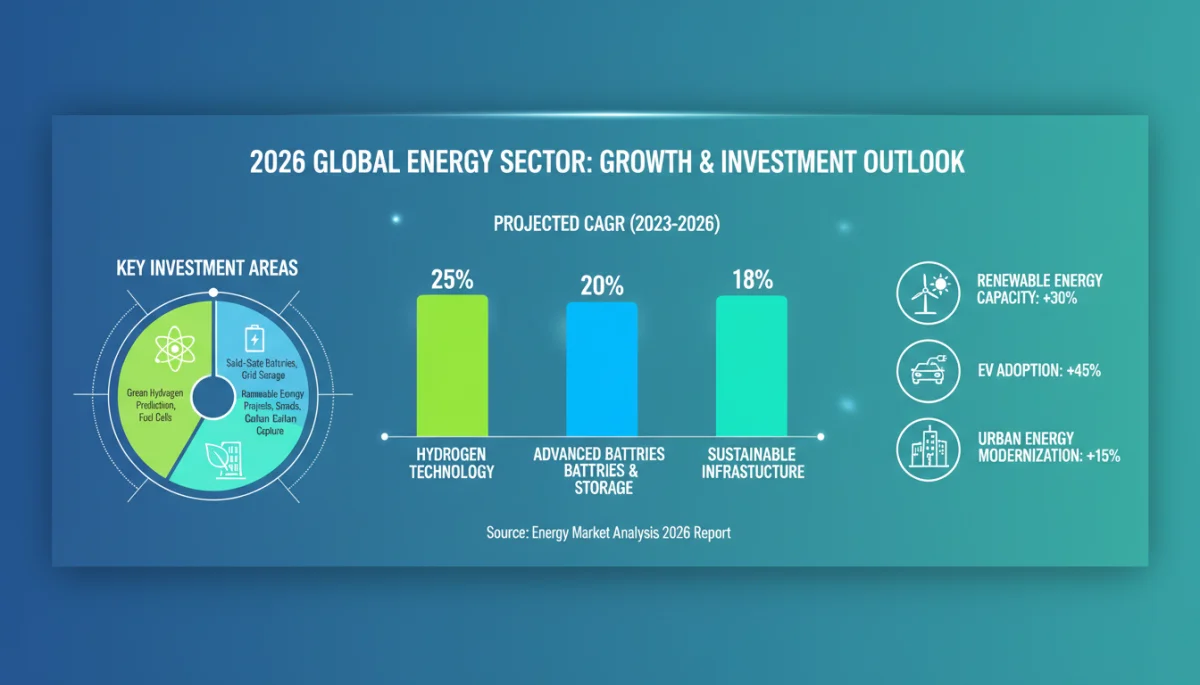
Pinpointing specific stocks with a 20% upside potential in the 2026 energy sector investments requires careful analysis. This involves looking beyond current market valuations to assess future growth catalysts, competitive advantages, and management effectiveness. Investors should focus on companies with strong innovation pipelines, robust balance sheets, and clear market leadership in their respective niches.
Criteria for selection
Several criteria can guide the selection process. Companies demonstrating consistent revenue growth, expanding profit margins, and a strong commitment to R&D are often good indicators. Furthermore, those with proprietary technology or a strong intellectual property portfolio tend to have a sustainable competitive advantage.
- Innovation leadership: Companies that are consistently developing and commercializing new technologies in renewables, storage, or grid solutions.
- Market positioning: Firms with a dominant market share in a high-growth segment or those poised to disrupt existing markets.
- Financial health: Strong balance sheets, manageable debt levels, and positive cash flow are crucial for sustainable growth.
- ESG commitment: Companies with strong Environmental, Social, and Governance (ESG) practices often attract more capital and demonstrate long-term viability.
A diversified approach, combining established renewable players with promising emerging technology firms, can help mitigate risk while maximizing potential returns. Thorough due diligence, including examining financial statements and analyst reports, is essential before making any investment decisions.
Risks and Challenges in Energy Investments
While the 2026 energy sector investments offer significant growth potential, they are not without risks. Investors must be aware of the challenges that could impact returns, including regulatory changes, technological obsolescence, and market volatility.
Regulatory and policy uncertainty
Government policies and regulations play a huge role in the energy sector. Changes in subsidies, carbon taxes, or environmental standards can significantly affect the profitability of energy projects. Political shifts and evolving international agreements introduce an element of unpredictability.
Companies heavily reliant on specific government incentives might face headwinds if those policies are altered or revoked. Diversifying across different regulatory environments can help mitigate this risk.
Technological disruption and competition
The rapid pace of technological innovation, while creating opportunities, also presents risks. A company’s leading technology today could be superseded by a new breakthrough tomorrow. Intense competition among energy firms can also compress profit margins.
- Obsolescence risk: Investments in older technologies might become less valuable as newer, more efficient solutions emerge.
- Market saturation: Certain segments, like basic solar panel manufacturing, could face oversupply, leading to price wars.
- Supply chain vulnerabilities: Geopolitical tensions or natural disasters can disrupt the supply of critical components and raw materials, impacting production and costs.
Investors should look for companies with strong R&D departments and a proven ability to adapt to changing technological landscapes. Staying informed about emerging trends and potential disruptions is vital for navigating these challenges effectively.
| Key Investment Area | Growth Potential & Focus |
|---|---|
| Renewable Energy | Solar, wind, and geothermal projects with increasing efficiency and cost-effectiveness. |
| Emerging Technologies | Green hydrogen production, advanced battery storage, and fuel cell development. |
| Infrastructure & Grid | Smart grid solutions, transmission line upgrades, and cybersecurity for energy networks. |
| Carbon Capture (CCUS) | Technologies for industrial decarbonization and CO2 utilization. |
Frequently asked questions about 2026 energy investments
The primary drivers include global decarbonization efforts, significant advancements in renewable energy technologies, supportive government policies, and increasing consumer demand for sustainable energy solutions. These factors collectively create a fertile ground for substantial investment and innovation across the sector.
Solar and wind power remain strong contenders due to continuous efficiency improvements and cost reductions. Additionally, emerging areas like green hydrogen and advanced battery storage are poised for exponential growth, offering significant upside for early investors in innovative technologies.
Energy infrastructure is critically important. Investments in smart grids, upgraded transmission lines, and cybersecurity are essential for integrating renewable sources and ensuring a reliable, efficient energy supply. These foundational improvements enable the broader energy transition and offer stable, long-term returns.
Carbon Capture, Utilization, and Storage (CCUS) is increasingly vital for decarbonizing heavy industries that cannot easily switch to renewables. While nascent, companies developing advanced CCUS technologies and infrastructure are gaining traction, presenting a targeted investment opportunity in the broader sustainability push.
Key risks include regulatory changes, rapid technological obsolescence, and market volatility. Investors should conduct thorough due diligence, focusing on companies with strong R&D, diversified portfolios, and robust financial health to navigate these challenges effectively and identify sustainable growth stocks.
Conclusion
The 2026 energy sector investments present a compelling landscape for growth, particularly for those astute enough to identify stocks with a 20% upside potential. The ongoing global energy transition, fueled by technological innovation, supportive policies, and increasing environmental consciousness, creates a fertile ground for strategic investments. While opportunities abound in renewables, emerging technologies, and critical infrastructure, a keen awareness of associated risks is paramount. By focusing on companies at the forefront of innovation with strong fundamentals, investors can position themselves to capitalize on the transformative shifts defining the energy sector in the coming years.
