Community College vs. 4-Year University: 2025 Cost-Benefit Analysis
Anúncios
Choosing between a community college and a 4-year university in the U.S. in 2025 necessitates a comprehensive cost-benefit analysis, considering financial implications, academic transferability, and long-term career advantages.
Anúncios
When considering higher education in the United States, the choice between a community college vs. 4-year university presents a pivotal decision for many students and their families. This 2025 cost-benefit breakdown aims to illuminate the financial impact, academic pathways, and career implications of each option, helping you make an informed choice for your future.
Understanding the Core Differences
The fundamental distinctions between community colleges and 4-year universities extend far beyond just the duration of study. These differences influence everything from campus culture to the type of degrees offered and, crucially, the financial investment required. Understanding these core disparities is the first step toward making an educated decision.
Anúncios
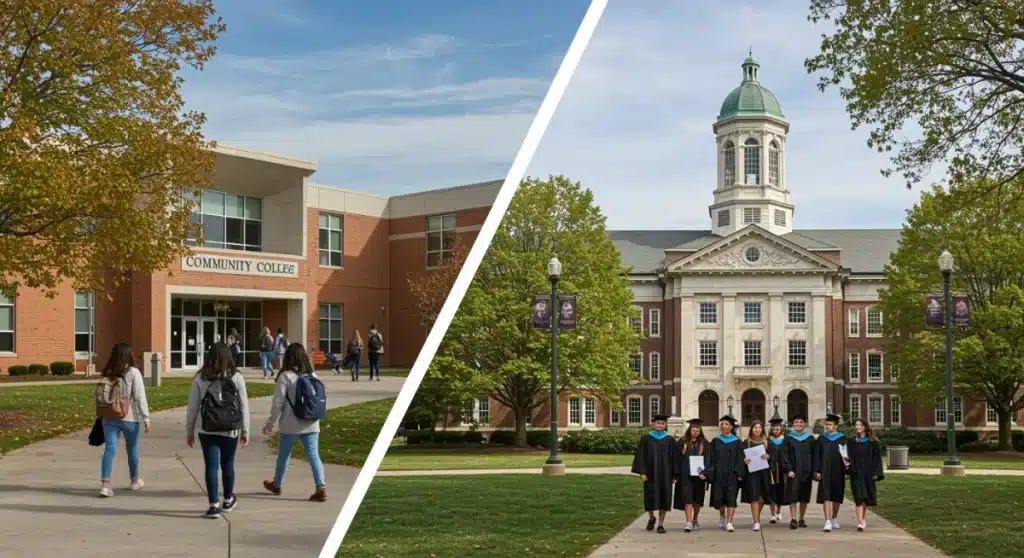
Community colleges typically offer associate degrees and vocational training, serving as a stepping stone for transfer to a 4-year institution or direct entry into the workforce. They are often locally focused, providing accessible education to a diverse student body. In contrast, 4-year universities, also known as colleges or baccalaureate institutions, award bachelor’s, master’s, and doctoral degrees, emphasizing comprehensive academic programs and research.
Academic Focus and Program Offerings
- Community Colleges: Primarily focus on associate degrees (AA, AS, AAS), certificate programs, and workforce development. They excel in providing foundational courses and practical skills.
- 4-Year Universities: Offer a broader range of bachelor’s degrees across numerous disciplines, alongside graduate and professional programs. Their curriculum often includes extensive general education requirements and specialized major studies.
Student Body and Campus Environment
The student demographics and campus atmosphere also vary significantly. Community colleges often attract a wide age range of students, including recent high school graduates, working adults, and those returning to education. Their campuses might be smaller and commuter-focused, fostering a practical, community-oriented learning environment.
Four-year universities, especially residential ones, tend to have a younger student population, with a strong emphasis on campus life, extracurricular activities, and a vibrant social scene. The academic environment is often more research-intensive, with a focus on theoretical knowledge and critical thinking.
In essence, while both pathways lead to higher education, their structures, offerings, and environments cater to different student needs and aspirations. Recognizing these foundational differences is key to evaluating which institution aligns best with individual goals.
The Financial Impact: A 2025 Perspective
For many, the most significant factor in choosing between a community college and a 4-year university is the financial cost. As we look at 2025, tuition fees, living expenses, and potential debt accumulation remain critical considerations. The cost difference can be substantial, influencing not only the immediate financial burden but also long-term economic well-being.
Community colleges are generally far more affordable. Their tuition rates are significantly lower than those of 4-year institutions, primarily because they often receive more state and local government funding and have a different operational model. This affordability can translate into less student loan debt, a major advantage for many families.
Tuition and Fees Comparison
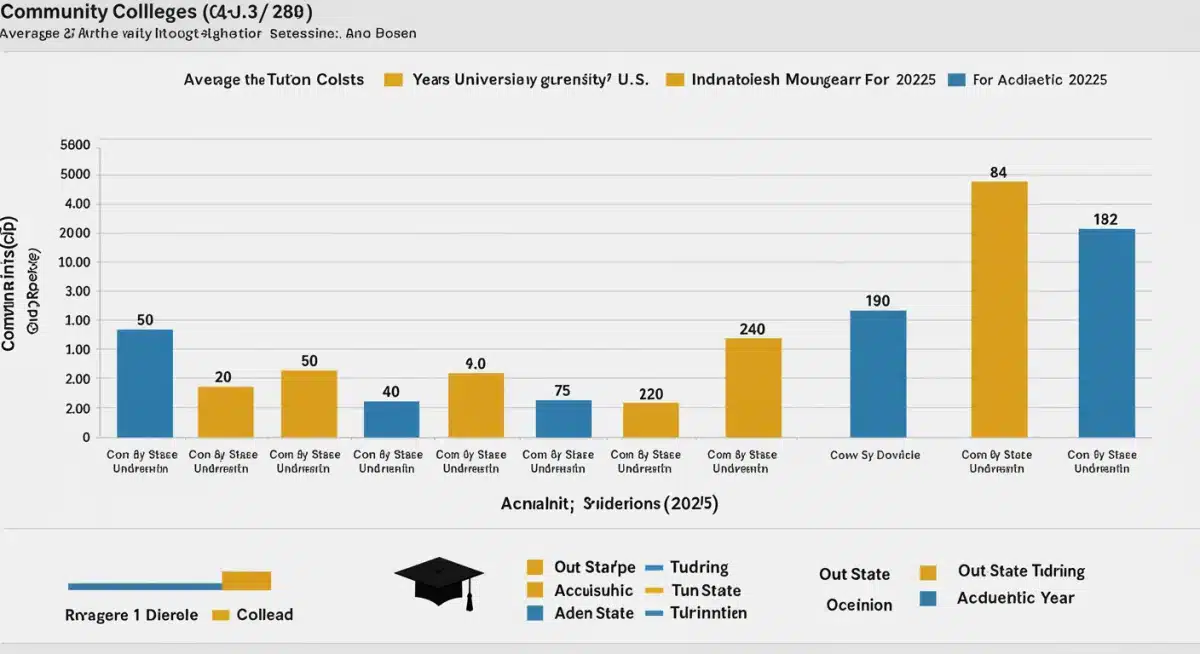
- Community College: The average annual tuition for in-state students at a public community college in 2025 is projected to be around $3,800 to $4,500. This figure is considerably lower than university costs.
- 4-Year University: Public 4-year universities are projected to average $10,500 to $12,000 for in-state tuition annually, while out-of-state tuition can soar to $27,000 to $30,000. Private universities typically exceed $40,000 per year.
Hidden Costs and Living Expenses
Beyond tuition, other expenses contribute significantly to the overall cost of education. These include housing, textbooks, transportation, and personal expenses. While community college students often live at home, saving on room and board, university students frequently incur these costs, especially if they live on campus.
The financial impact also extends to potential earnings during study. Community college students may have more flexibility to work full-time or part-time while studying, mitigating some of the financial strain. University students, particularly those in demanding programs, might find it harder to balance work and studies, potentially increasing their reliance on loans.
Ultimately, the financial analysis for 2025 strongly favors community colleges for initial savings. However, this must be balanced against potential long-term earnings and career trajectory, which can sometimes be influenced by the prestige and network of a 4-year university.
Academic Pathways and Transferability
One of the most appealing aspects of community colleges is their role as a gateway to 4-year universities. Many students choose to start at a community college to complete their general education requirements and then transfer their credits to a university to earn a bachelor’s degree. This pathway, often referred to as the ‘2+2’ model, offers a cost-effective route to a university degree.
However, the success of this transfer pathway hinges on meticulous planning and understanding articulation agreements between institutions. These agreements ensure that credits earned at a community college are accepted by a specific 4-year university, preventing loss of time and money.
Ensuring Smooth Credit Transfer
- Articulation Agreements: Many community colleges have formal agreements with state universities that guarantee credit transfer for specific programs. Students should research these agreements thoroughly.
- Counseling and Advising: Utilizing academic advisors at both the community college and the target university is crucial. They can help plan coursework to align with transfer requirements and ensure a seamless transition.
Without proper planning, students risk taking courses that do not transfer, leading to wasted effort and increased time to degree completion. It is imperative to identify the target 4-year institution early and work closely with advisors to select appropriate courses.
Four-year universities, on the other hand, offer a direct path to a bachelor’s degree. Students typically enroll as freshmen and complete all four years at the same institution. While this provides a more consistent academic experience and immediate access to university resources, it often comes with the higher initial cost.
The flexibility of academic pathways means that students can tailor their educational journey to their financial situation and academic readiness. The transfer option provides a valuable opportunity to mitigate costs without sacrificing the ultimate goal of a bachelor’s degree from a 4-year institution.
Career Outcomes and Employability
The ultimate goal for many students pursuing higher education is to enhance their career prospects and earning potential. Both community colleges and 4-year universities play distinct roles in preparing students for the workforce, with varying outcomes depending on the chosen field and level of education.
Community colleges often focus on vocational and technical training, equipping students with specific skills for immediate entry into high-demand jobs. Fields like healthcare support, skilled trades, and information technology frequently see graduates from community colleges securing stable employment quickly. Their programs are typically designed with direct input from local industries, ensuring relevance to current market needs.
Direct Employment vs. Advanced Degrees
Graduates with associate degrees or certificates from community colleges are often ready to enter the workforce directly. They fill essential roles that require specialized skills but not necessarily a bachelor’s degree. This path can lead to quicker financial independence and practical experience.
Conversely, 4-year university graduates, particularly those with bachelor’s degrees, often pursue careers that require a broader theoretical foundation, critical thinking, and advanced problem-solving skills. These roles can be found in a wider array of industries, from business and engineering to education and scientific research. While entry-level salaries might be similar in some fields, bachelor’s degree holders generally experience higher lifetime earnings and greater upward mobility.
- Community College Graduates: Often enter roles requiring specific technical skills (e.g., registered nurses, electricians, web developers). Their median earnings can be competitive in their specialized fields.
- 4-Year University Graduates: Typically pursue careers demanding a comprehensive academic background (e.g., engineers, teachers, business analysts). These roles often have higher long-term earning potential and greater opportunities for advancement.
The choice between these institutions can also influence networking opportunities. Universities often have extensive alumni networks and career services departments that can be invaluable for job placement and career progression. Community colleges, while also offering career support, tend to have more localized networks.
Therefore, while community colleges provide excellent pathways to immediate employment in specific sectors, 4-year universities often open doors to a broader range of professions and higher earning potential over a lifetime. The best choice depends on individual career aspirations and the desired level of education.
Flexibility and Support Services
Both community colleges and 4-year universities offer a range of support services designed to help students succeed, but their approaches and the flexibility they provide can differ significantly. Understanding these differences is crucial for students who may require specific accommodations or prefer a more adaptable learning environment.
Community colleges are renowned for their flexibility. They often offer a variety of class schedules, including evening, weekend, and online courses, making them ideal for students balancing work, family, and education. This adaptability is particularly beneficial for non-traditional students or those with other commitments. Moreover, their open-enrollment policies often mean fewer stringent admission requirements, increasing accessibility.
Accessible Learning Environments
Class sizes at community colleges tend to be smaller, fostering a more intimate learning environment where students may receive more individualized attention from instructors. This can be a significant advantage for students who thrive in less intimidating settings or require additional academic support.
Four-year universities, especially larger institutions, might have larger class sizes, particularly in introductory courses. While they also offer extensive support services, including academic advising, tutoring centers, and career counseling, accessing these resources can sometimes feel less personalized due to the sheer volume of students.
- Community College Support: Focuses on foundational academic skills, career readiness, and transfer assistance. Often provides robust support for students with diverse educational backgrounds.
- 4-Year University Support: Offers comprehensive academic support, research opportunities, mental health services, and extensive career placement assistance, often catering to a more traditional student demographic.
The level of personal attention and the flexibility in scheduling can play a crucial role in a student’s success, particularly for those transitioning from high school or returning to education after a hiatus. Community colleges often excel in providing a supportive and adaptable environment that caters to a wider array of student needs.
The Social and Campus Experience
Beyond academics and finances, the social and campus experience forms a significant part of the college journey. The environments at community colleges and 4-year universities typically offer different types of engagement and social development opportunities.
Four-year universities, particularly residential campuses, are often synonymous with a vibrant campus life. They typically offer a plethora of extracurricular activities, including sports teams, fraternities and sororities, student clubs, and on-campus events. Living in dorms or off-campus housing near the university fosters a strong sense of community and provides numerous opportunities for social interaction and personal growth. The university experience often involves a holistic development, encompassing academic, social, and personal aspects.
Community and Engagement Opportunities
Community colleges, while sometimes having smaller campuses and a higher proportion of commuter students, also offer avenues for social engagement. Many have student clubs, athletic teams, and campus events, though perhaps on a smaller scale than a large university. The social experience at a community college might be more localized and focused on connecting with peers from the immediate community.
For students who prioritize a traditional college experience with a strong residential component, a 4-year university often fits the bill. The immersive environment can lead to lifelong friendships, diverse experiences, and a strong sense of institutional identity. However, this comes with the added cost of room and board and potentially a more competitive social scene.
Conversely, students who prefer a more focused academic environment, or who have existing social networks and commitments outside of school, might find the community college setting more suitable. It allows them to pursue their education without necessarily immersing themselves in a full-time residential campus culture. Both pathways offer valuable experiences; the ‘better’ option depends entirely on individual preferences and priorities for social integration and campus life.
Making an Informed Decision for 2025
The decision between a community college and a 4-year university in the U.S. for 2025 is a complex one, influenced by a multitude of factors including financial capacity, academic goals, career aspirations, and personal preferences for campus life. There is no universally ‘correct’ choice; rather, the optimal path is highly individualized and requires careful self-assessment and research.
For many, starting at a community college can be a strategic financial move, allowing them to save significantly on tuition while completing foundational coursework. This can alleviate the burden of student loan debt, which has become a pressing concern for millions of students. The ability to transfer credits to a 4-year institution provides a flexible and affordable route to a bachelor’s degree.
Key Considerations for Your Path
- Financial Resources: Assess your budget, potential for financial aid, and willingness to incur student loan debt. Community colleges offer a clear financial advantage for the first two years.
- Academic Readiness: Consider your academic preparation and whether a smaller class size and more individualized attention at a community college would be beneficial for your learning style.
- Career Goals: Evaluate whether your desired career path requires a specific degree level or vocational training. Some professions are accessible with an associate degree, while others demand a bachelor’s or higher.
- Personal Preferences: Think about the type of social environment and campus experience you seek. Do you prefer a vibrant residential campus or a more localized, commuter-friendly setting?
Ultimately, prospective students should engage in thorough research, visit campuses, speak with advisors from both types of institutions, and consider their long-term objectives. The landscape of higher education in 2025 offers diverse opportunities, and understanding the nuances of each option is paramount to choosing a path that aligns with your unique circumstances and future aspirations.
| Key Aspect | Description in 2025 Context |
|---|---|
| Cost Efficiency | Community colleges offer significantly lower tuition, reducing initial debt for the first two years. |
| Academic Pathway | Community colleges facilitate 2+2 transfer programs; universities offer direct 4-year bachelor’s degrees. |
| Career Outcomes | Community colleges for vocational skills; universities for broader career paths and higher lifetime earnings. |
| Student Experience | Community colleges offer flexibility; universities provide comprehensive residential campus life. |
Frequently Asked Questions
Not necessarily. While 4-year degrees often lead to higher lifetime earnings, community college degrees are highly respected for specific vocational fields and as a strong foundation for university transfer. Employers value practical skills and relevant experience.
Students can save thousands of dollars annually on tuition and living expenses by attending a community college for their first two years. This can significantly reduce overall student loan debt for a bachelor’s degree.
Both types of institutions offer federal financial aid (Pell Grants, student loans). However, universities often have more institutional scholarships and grants, while community colleges might have more localized scholarships and state-specific aid programs.
Not always automatically. It’s crucial to research articulation agreements between institutions and work with academic advisors to ensure chosen courses align with the transfer requirements of your target 4-year university. Planning is key.
Direct entry offers an immersive campus experience, immediate access to extensive resources, a broader range of academic programs, and potentially stronger alumni networks. It can also provide a consistent academic path without the need for credit transfer planning.
Conclusion
The decision between a community college and a 4-year university in the U.S. for 2025 is deeply personal, reflecting individual financial realities, academic aspirations, and desired social experiences. While community colleges offer a compelling value proposition through lower costs and flexible pathways, 4-year universities provide a comprehensive and immersive educational journey with extensive resources. By carefully evaluating the financial impact, academic transferability, career outcomes, and the unique campus environments, students can confidently choose the educational route that best aligns with their goals and sets them on a path to success.
